
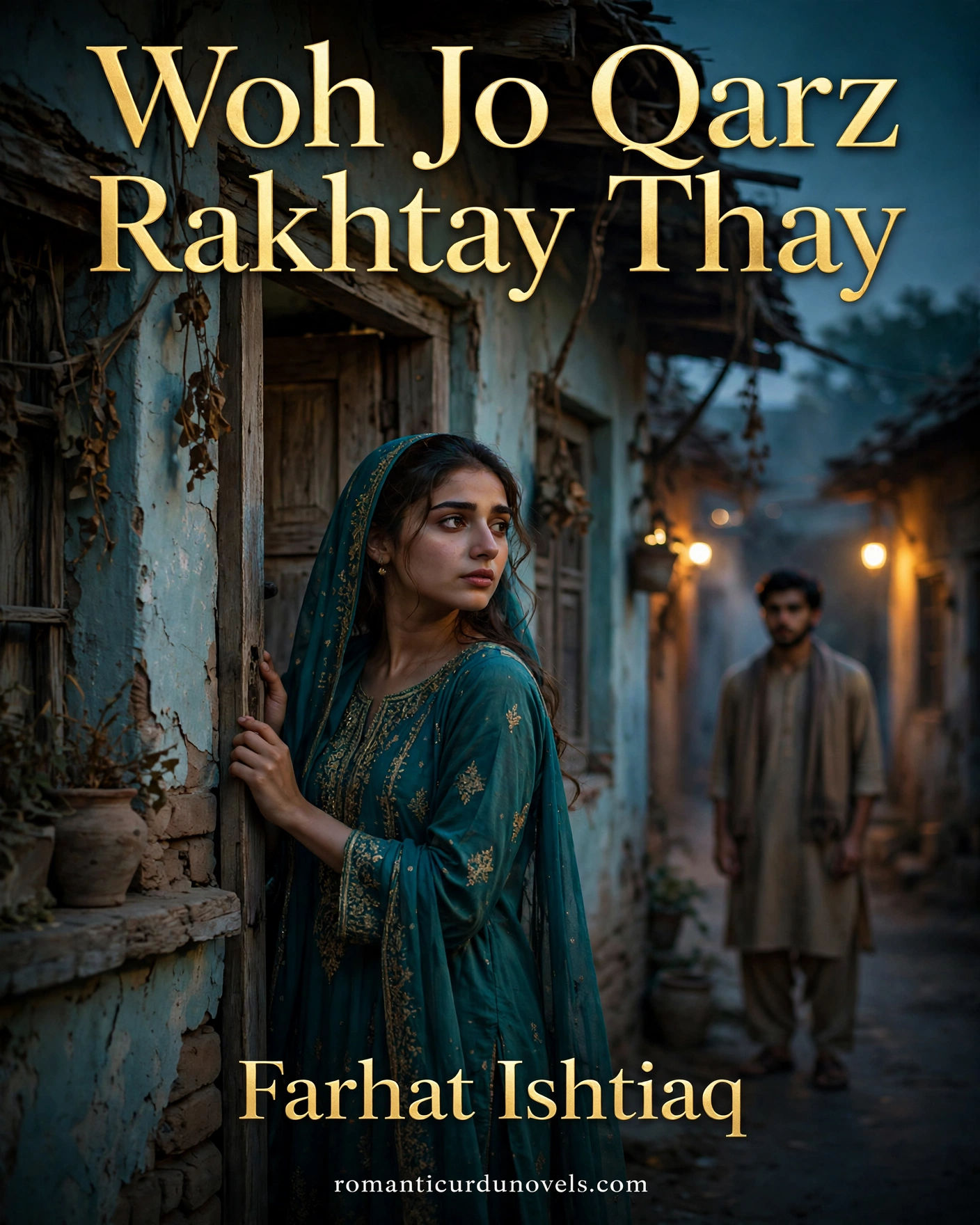
Woh Jo Qarz Rakhtay Thay by Farhat Ishtiaq – Complete PDF Download
romanticurdunovels.com
| Novel Details | Information |
|---|---|
| Novel Name | Woh Jo Qarz Rakhtay Thay (also written Woh Jo Qarz Rakhtay Thay Jaan Par) |
| Author Name | Farhat Ishtiaq |
| Novel Genre | Social Romantic, Family, Emotional |
| Language | Urdu |
| Novel Status | Complete |
| Availability | Read Online and Complete PDF Download |
| First Published | Reportedly first published in a monthly digest |
Woh Jo Qarz Rakhtay Thay Novel by Farhat Ishtiaq: Complete Story Overview
The title itself is the key to the whole novel. “Woh Jo Qarz Rakhtay Thay” means “those who held debts”, and the fuller form of the title adds “Jaan Par”, on their lives. The debt in this story is not a loan to be repaid in rupees. It is an emotional debt: the price of a past mistake, the weight of family honour, and the unspoken demand that a daughter should set right what went wrong before her. Farhat Ishtiaq builds the novel around that one idea, and every choice in the story tests it.
At the centre of the story is Fariya, also spelled Fariha in some listings. She is a young woman searching for identity and belonging, and fate brings her to live in her grandparents’ home. There, slowly and painfully, she begins to uncover difficult truths about her mother’s past. Her mother made a choice that cracked the relationship between her mother and her grandparents, and Fariya grows up in the shadow of that rift. The grandparents love her and treat her with respect, yet she cannot escape the feeling that she is living inside someone else’s history, trying to understand who she is apart from what her mother did.
Into this life comes Saad Munir. Their bond begins in friendship, in the easy teasing and everyday closeness of young people who grow up around each other, and it deepens into love. Saad is remembered by readers as a gentle, caring presence, a man whose feelings are steady rather than dramatic. For a time, it seems that love might be the way out of the past, a new beginning that belongs to Fariya alone.
But this is not a novel in which love simply wins. Fariya’s growing closeness to Saad is tested again and again by family obligations, by misunderstandings, and by the old emotional debts that neither of them created but both must face. The turning point of the novel, as readers describe it again and again, is Fariya’s decision to give up her love. She does this not because she is forced at sword point, and not because she has stopped loving Saad. She does it by choice, because her blood relations and their respect matter so much to her that she will sacrifice her own heart rather than repeat her mother’s history and break her family a second time. That is the “qarz” being repaid: a daughter paying, with her own happiness, for a debt she did not herself take on.
This is why the novel divides readers in the best way. Some call it heartbreaking, some call it beautiful, and most call it both. The story moves through anger, love, happiness, pain and hurt, and ends with a kind of relief that is still melancholic. Saad’s last letter to Fariya is the scene readers mention most, and it is best left unread in summary. It lands harder when you reach it yourself, in the novel’s own words.
What Does Woh Jo Qarz Rakhtay Thay Mean?
Word by word, “woh” means “those”, “jo” means “who”, “qarz” means “debt” or “loan”, and “rakhtay thay” means “used to hold” or “kept”. So the title reads as “Those Who Held Debts”. The fuller title, “Woh Jo Qarz Rakhtay Thay Jaan Par”, adds “upon their lives”: debts carried not in a ledger, but on one’s life itself. That is exactly how Farhat Ishtiaq uses the idea. The characters carry debts of gratitude, of guilt, of family honour and of love, and the novel asks whether such debts can ever really be settled, and what it costs to try.
Readers searching for the book will meet it under several spellings, because Roman Urdu has no single standard. You may see “Wo Jo Qarz Rakhte The Jaan Par”, “Wo Jo Qaraz Rakhte The Jan Par”, “Woh Jo Qarz Rakhtay Thay Jaan Per” and similar forms. They are the same novel by the same author. If a listing shows a completely different hero and heroine, or a happy reunion plot, treat it with suspicion: it does not match the sources that agree on Fariya and Saad.
Main Characters in Woh Jo Qarz Rakhtay Thay
Only two characters are named consistently across independent sources for this novel, and this page names only those two. Anything beyond them would be guesswork, and a novel this loved deserves better than invented detail.
Fariya (Fariha)
The heroine. A pure-hearted, principled young woman who comes to live with her grandparents and must make sense of her mother’s past. Her defining quality, in readers’ words, is that she thinks with her heart and still chooses her family, even when that choice breaks her own heart.
Saad Munir
The hero. A caring, gentlemanly young man whose friendship with Fariya grows into love. Readers remember his steadiness, their childhood teasing, and the letter he leaves behind, which many call the most moving part of the book.
Her grandparents matter deeply to the story as a presence, the home and the history Fariya is trying to honour, but no source used for this page gives them as individually named characters with a plot of their own, so they are described here only in that role. That restraint is deliberate: it keeps this page true to what can actually be verified.
Main Themes in Woh Jo Qarz Rakhtay Thay
Emotional Debt
The central theme. A parent’s mistake becomes a debt a daughter feels she must repay, not with money, but with sacrifice and emotional strength.
Sacrifice by Choice
Fariya’s sacrifice is powerful precisely because it is chosen. She is not a passive victim of fate; she weighs love against family respect and chooses family, knowing the cost.
Family Honour and Obligation
Family is both shelter and pressure in this novel. The grandparents’ home gives Fariya belonging, and it also sets the terms on which belonging is kept.
Identity and Belonging
Fariya’s search for who she is, apart from her mother’s story, runs through the whole novel, from her arrival at her grandparents’ home to her final decision.
Love That Does Not Get Its Way
Unlike many romantic novels, love here is real and still not enough. That refusal of an easy ending is why readers still argue about, and remember, this book.
Healing and Forgiveness
Even in sadness, the novel moves toward healing: understanding the past, forgiving it where possible, and finding a quiet relief at the end.
Is the Ending of Woh Jo Qarz Rakhtay Thay Happy or Sad?
Honestly, and without spoiling the final scenes: readers widely report a sad, bittersweet ending, not a conventional happy ending. One reader review puts it plainly, “sometimes we don’t get a happy ending”, while still calling the story worth reading. Another guide to Farhat Ishtiaq’s novels says the ending is sad but memorable, and that it touches readers’ hearts regardless. The novel is also tagged “sad ending” by the listing sites that carry it.
That does not mean the ending is hopeless. Readers describe feeling relief alongside the sadness, and a lasting melancholic effect rather than despair. The sadness comes from a choice, not from cruelty or accident, and that is what gives the ending its dignity. If you only enjoy romances that end with the couple together, go in with your eyes open: this novel will probably break your heart a little. If you enjoy stories about difficult choices and the price of family loyalty, that heartbreak is exactly the point, and it is why the book is still discussed years later.
About the Author: Farhat Ishtiaq
Farhat Ishtiaq, born 23 June 1980 in Karachi, is one of Pakistan’s best-loved Urdu novelists and screenwriters. She began writing for Urdu digests in 2004, and her work mostly focuses on Pakistani society, on family relationships, and on love tested by social pressure. She is best known for Humsafar, Mata-e-Jaan Hai Tu, Diyar-e-Dil and Dil se Nikle Hain Jo Lafz, and she went on to write some of Pakistani television’s most successful dramas, including Humsafar, Diyar-e-Dil, Udaari and Yaqeen Ka Safar. Woh Jo Qarz Rakhtay Thay sits firmly in that tradition: a digest-rooted, emotionally intense story about a woman caught between her heart and her family.
One caution for readers: a Hum TV remake of this novel was rumoured in online discussion, but no confirmed drama adaptation was found when this page was researched. Do not trust listings that present a drama cast or air date for this title without a reliable source.
Who Should Read Woh Jo Qarz Rakhtay Thay?
This novel is for you if you love Farhat Ishtiaq’s emotional, family-centred storytelling, if you enjoy social romantic novels where feelings run deep and choices have real costs, and if you do not mind an ending that makes you think rather than simply cheer. It is also a good next read after Humsafar or Diyar-e-Dil, because it shares their concern with family honour and sacrifice, but takes it in a sadder, more reflective direction.
It is probably not for you if you want a light, funny romance, a fast thriller, or a guaranteed happy ending. There is humour in the early friendship between Fariya and Saad, but the novel’s centre of gravity is serious, and its final mood is melancholic. Knowing that before you start is part of enjoying it properly.
Download Woh Jo Qarz Rakhtay Thay Novel by Farhat Ishtiaq: Free PDF
Read or download Woh Jo Qarz Rakhtay Thay by Farhat Ishtiaq, the complete novel, for free. Click the button below and your file will begin in 10 seconds:
A note on length: sources disagree on page count. One listing gives 97 pages for its PDF, while a book database gives 240 pages, and the difference almost certainly comes from different editions and PDF layouts. Treat any single page number you see online with caution, and judge the novel by its story, not by a disputed count.
Frequently Asked Questions
Who wrote Woh Jo Qarz Rakhtay Thay?
Is Woh Jo Qarz Rakhtay Thay a complete novel?
What is Woh Jo Qarz Rakhtay Thay about?
Who are the main characters?
Is the ending happy or sad?
Is Woh Jo Qarz Rakhtay Thay Jaan Par the same novel?
Is there a drama of Woh Jo Qarz Rakhtay Thay?
How many pages is Woh Jo Qarz Rakhtay Thay?
Can I read Woh Jo Qarz Rakhtay Thay online for free?
More Urdu Novels You Will Love
Explore more complete romantic Urdu novels free on Romanticurdunovels.com:
Final Verdict
Woh Jo Qarz Rakhtay Thay by Farhat Ishtiaq is a novel about the debts we do not choose and the choices we make to repay them. Fariya’s story, from her grandparents’ home to her love for Saad Munir and her final, chosen sacrifice, is sad, tender and unusually honest about what family loyalty can cost. It will not give you the easy happy ending many romances promise, and that is precisely why it stays with you.
The complete novel is available for free. Click the Read Online or Download button above, your file will begin in 10 seconds, and start reading today.

One Comment